

Stainless steel pipes are widely used in water supply and drainage, industrial fluid transmission, and HVAC systems, with their quality directly affecting pipeline safety, service life and fluid transportation efficiency. Here are the key methods to identify high-quality stainless steel pipes.
First, inspect the appearance and dimensions. High-quality stainless steel pipes have a smooth, glossy inner and outer surface, without cracks, dents, uneven welding seams (for welded pipes) or obvious color differences. The pipe wall thickness is uniform and consistent with the marked size, and the port is cut neatly without burrs or deformation. Inferior pipes often have rough surfaces, uneven wall thickness, and irregular ports that easily cause fluid blockage or connection problems.
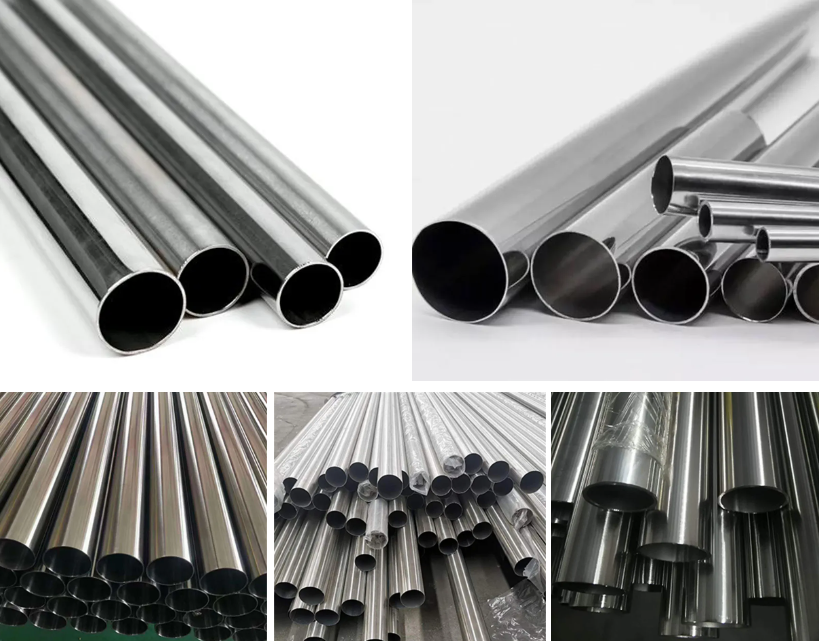
Second, check the labeling and qualification certificates. Qualified stainless steel pipes are clearly marked with core information such as material grade (304 for general water supply, 316 for chemical and marine environments), nominal diameter, wall thickness and production batch number. They are also accompanied by formal material certificates and quality inspection reports, which detail the chemical composition and mechanical properties of the pipe material. Reject products with blurred labels, missing information or no official certification.
Third, perform simple practical tests. For the magnetic test, 304 and 316 austenitic stainless steel pipes have weak or no magnetism; obvious strong magnetism often indicates unqualified material composition. Tap the pipe gently with a hard object: high-quality pipes emit a clear, crisp sound, while inferior pipes with impure materials produce a dull, heavy sound. In addition, check the roundness of the pipe by rolling it on a flat surface; qualified pipes roll smoothly without wobbling or deformation.
Finally, select formal and reputable suppliers. Regular manufacturers adopt standardized production processes and strict quality control, and can provide complete after-sales service such as installation guidance and quality assurance. Inferior cheap pipes from unregular channels often cut corners on materials and processes, with hidden quality hazards.
Grasp these identification skills to choose high-quality stainless steel pipes, which can effectively avoid pipeline failures and ensure the stable operation of various systems.