

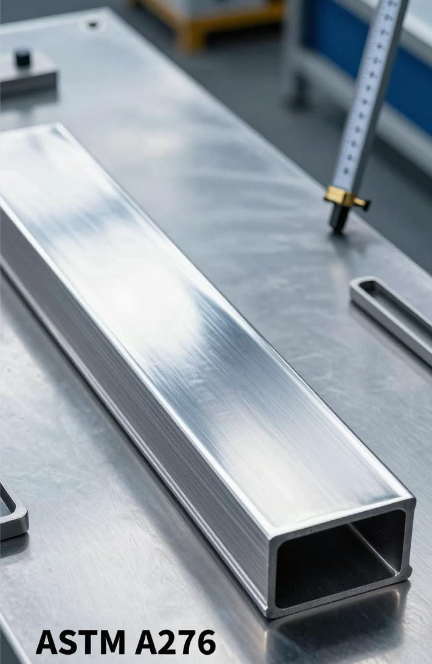
When it comes to industrial tank construction and heavy-duty structural fabrication, choosing the right material can make the difference between a 10-year service life and a 30-year reliable performance. Among all the metal options available on the market, ASTM A276 316 Stainless Steel Flat Bar has stood out as the top choice for tank stiffener and bracket fabrication projects across chemical processing, marine, water treatment, and food & beverage industries. This article will walk you through why this material has become the go-to solution for engineers, fabricators, and project managers worldwide.
What Is ASTM A276 316 Stainless Steel Flat Bar?
ASTM A276 is the globally recognized standard specification for stainless steel bars and shapes, setting strict requirements for chemical composition, mechanical properties, dimensional tolerances, and surface finish. The 316 grade under this standard adds molybdenum to its alloy structure, which significantly enhances its resistance to chloride corrosion, acidic environments, and high-temperature oxidation compared to common 304 stainless steel.
A standard ASTM A276 316 stainless steel flat bar typically contains no more than 0.08% carbon, 2.0% manganese, 2.0-3.0% molybdenum, 16.0-18.0% chromium, and 10.0-14.0% nickel. Its minimum tensile strength reaches 515 MPa, with a 0.2% offset yield strength of no less than 205 MPa, and elongation in 2 inches can hit 40% or higher. These properties ensure the flat bar maintains excellent toughness and structural stability even under long-term heavy load conditions.
Why It Is Perfect for Tank Stiffener Fabrication
Tank stiffeners are critical components that prevent large storage tanks from deforming under internal pressure, external wind load, or vacuum conditions. Many fabricators used to face frequent problems like rust penetration, stress cracking, or uneven load distribution after installation — issues that often lead to costly shutdowns and safety risks.
ASTM A276 316 stainless steel flat bar solves these pain points perfectly. First, its outstanding chloride corrosion resistance makes it ideal for tanks that store brine, chemical solvents, or are installed in coastal marine environments. Unlike carbon steel that requires regular anti-corrosion coating maintenance, this 316 grade material can resist pitting and crevice corrosion for decades even in harsh outdoor conditions. Second, the uniform mechanical properties defined by ASTM A276 ensure every section of the flat bar delivers consistent strength, eliminating hidden weak points in the stiffener ring. Third, its excellent weldability and machinability allow fabricators to cut, bend, and weld the bars into precise stiffener profiles without losing structural integrity.
Advantages for Bracket Fabrication Projects
Structural brackets for tanks, pipe supports, and industrial equipment demand both high load-bearing capacity and long-term reliability. ASTM A276 316 stainless steel flat bar offers unique advantages for this application that other materials cannot match.
The flat, rectangular shape of this product provides a larger contact surface during installation, which distributes stress more evenly and reduces the risk of local deformation. It is available in a wide range of thicknesses from 3mm to 30mm and widths from 12mm to 200mm, making it easy to find the exact dimension you need for custom bracket designs without extra forging or rolling processes. Many suppliers also provide additional services like polishing, edge deburring, and precision cutting, which can greatly reduce your secondary machining time and lower overall project costs.
For outdoor or chemical plant environments, the non-magnetic and low-carbon features of ASTM A276 316 stainless steel flat bar also help avoid electrochemical corrosion risks when paired with other stainless steel components, extending the whole service life of your bracket system.
How to Select the Right ASTM A276 316 Stainless Steel Flat Bar for Your Project
To get the best performance for your tank stiffener and bracket fabrication, there are several key points you should confirm when placing an order. First, make sure the material strictly complies with ASTM A276 standard, with official test reports covering chemical composition and mechanical properties. Second, choose the right surface finish according to your working environment — hot rolled pickled finish is suitable for general industrial use, while polished or hairline finish is recommended for food processing or pharmaceutical tank projects. Third, confirm the dimensional tolerance range, especially for the thickness and width, to ensure the bars can fit your existing fabrication jigs and welding fixtures perfectly.
If your project involves pressure vessel-related applications, you can also choose ASTM A479 316 stainless steel flat bar as an alternative, which provides extra ASME Code traceability while maintaining similar material performance to ASTM A276.
Final Thoughts
For any project that requires long-lasting, corrosion-resistant, and high-strength structural components, ASTM A276 316 Stainless Steel Flat Bar remains the most cost-effective and reliable choice for tank stiffener and bracket fabrication. It not only reduces your long-term maintenance and replacement costs but also brings higher safety and stability to the entire tank system. Whether you are a metal fabricator, an engineering contractor, or a plant maintenance manager, this material will help you deliver projects that meet the highest industrial standards.
If you are looking for high-quality ASTM A276 316 stainless steel flat bar with complete certification and fast delivery, our full range of sizes and custom processing services can perfectly meet your project requirements.